Play

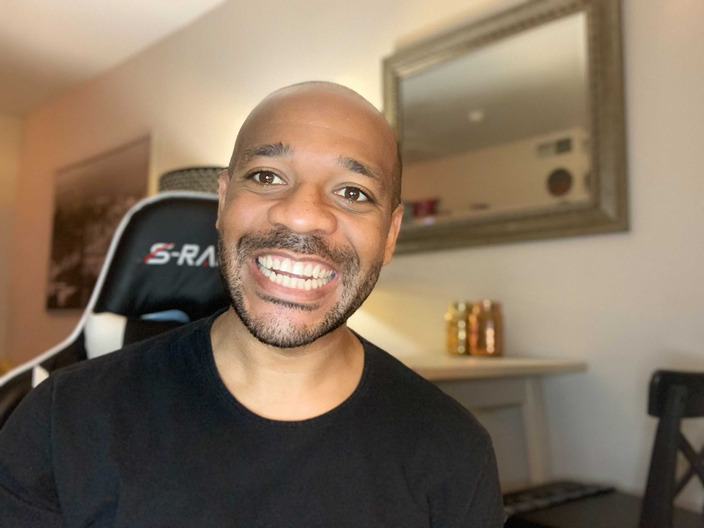
Alan Robbins is a self-taught programmer who dabbled with programming in college. After not doing to well in the post-secondary system with respect to programming, he changed his major and graduated with a degree in Business Economics and a minor in Psychology and Philosophy.

After graduating, he decided that he had a knack for programming (even if the “system” told him otherwise) so he ended up getting an entry level job as a programmer. Since then, he’s started up a couple of businesses and is now running a very successful software development company with 40 employees and “lives the dream” by working from home.

The Desire to Learn

I’ve said it before, and I’ll continue to say it. Those with the desire to BE a programmer will make it happen. With all of the tools and resources available today, anyone with the desire can learn how to program. It isn’t an easy process and the journey will be paved with failures, but that’s completely normal. In this podcast episode Alan shares the story of the first program(s) he wrote as an entry level programmer. He talked about how the program would “bring the computer system to its knees” because of how poorly coded the program was, but like I said, this is par for the course.

No programmer is going to be perfect out of the gate, and it’s the learning process that is so important. It’s critical to find a mentor and learn as much as you can from someone who has BEEN through the coding trial by fire already. So if you are someone who wants to learn how to code and finds it so interesting, but believe that they are “just not smart enough to be a programmer”… think again.

Links mentioned in this episode

Me

I invite you to reach out to Alan and ask him any questions that you may have about his journey to becoming a successful self-taught programmer. Alan is an extremely nice guy and I’m sure he’d love to talk to you. So send him a message, even if it’s just to say “Hello, I heard you on the podcast!”.

{ 0 comments }

Play

Software Development Life-Cycle

In this episode of the How to Program with Java podcast, I will be talking about the software development life-cycle. This topic is necessary to know if you will be working in any sort of professional development environment. When I was first introduced to the “methodologies” of the software development life-cycle in my first programming job, I was lost. The goal of this podcast is to educate you on the procedures that are followed by the majority of software development companies.

Lessons to be Learned

Here’s some background on where I went wrong in my first programming job. I was unaware of the different “stages” that any particular code change must go through before it is released LIVE on the internet to the customers. In my mind, as a brand new programmer in the real world, I would just make a coding fix and then push it out for all the customers to enjoy. There were a lot of assumptions that were made here, but the main one was I assumed that my fix was perfect and that I had tested ALL of the scenarios that could have been affected by my coding change. I was also completely oblivious to the “stages” of a code change. For that particular company here’s what it looked like:

  1. DEV – The first stage where I would make my coding changes and test on my machine
  2. QA – The code is checked into a central code repository and tested by a QA employee (usually not a coder)
  3. UAT – Once passed QA, the change would be passed to a real customer who had their own testing environment setup. They would perform tests to ensure that there are no unforeseen consequences
  4. PROD – After everyone is happy that nothing is broken, the change is sent LIVE on the internet and real customers will benefit from the fixes/enhancements

[click to continue…]

{ 0 comments }

Play


Keeping on our theme of becoming a success story with programming as a self-taught programmer, I interview a successful self-taught programmer by the name of John Sextro. As a seasoned programmer and agile coach with no degrees or diplomas, John made it to ‘the big show’ by impressing one of the gatekeepers of that coveted ‘entry level programmer’ position. Find out how he managed to kick start his career in today’s interview.

Getting your Foot in the Door

One of the most important lessons that you should learn from people like John (and myself) is that we weren’t just in the right place at the right time… we PUT ourselves in the situations that would lend themselves to opportunities. If you’re having troubles finding an entry level position as a programmer, then maybe you should change the game a bit and look for a job in a company that HAS a software department?

If you’re in a company that has a software development department (even if YOU yourself aren’t IN that department) you are in an excellent position to show off your skills as a VALUABLE employee. If you are known as someone who provides real value to a company, then you show that your true skills (as a programmer) aren’t even being utilized… well… it won’t be long until the company will take advantage of that situation.

It’s much easier to Learn Programming these days

As John mentions, he learned what he knew from books and magazines (which he had to either purchase himself or have his parents purchase for him). These days, getting access to valuable information about programming is as easy as typing something into Google! It’s FREE access to life changing information, all you need to do is show up.

Now some of you pessimists out there may grumble “Well, if everyone has access to the information, then there are probably so many programmers out there that there aren’t any jobs left!”. Well, to you sir/madam, I shake my head. Go do a search for programming jobs on indeed.com… seriously… I’ll wait. [click to continue…]

{ 3 comments }

HTML Layout and Design

by Trevor Page on May 1, 2013

!cid_122581FD-9B02-4BD6-8C88-195EDBD966DFOkay so you know how to add some styles and CSS to your webpage, that’s a great start, but what about deciding where all your text should go?  What if you wanted to setup your website so that you have some text on the left hand side, and some images along the right?

This is where design and layout comes into play.

The DIV tag

Probably one of the most powerful tools at your disposal for designing your webpage is the div tag.  What this allows you to do is essentially outline “blocks” or “areas” for the content on your webpage.  You can think if these areas like boundaries for your content.

So for example, like I mentioned, let’s design a webpage that has a bunch of text on the left hand side (perhaps about 3/4 of the page), and we’ll allow for about 1/4 of the right hand side to hold images.  Here’s a picture to add some context to what I’m talking about:

HTML Layout and Design

Before I jump into the code, I want to talk a little more about the DIV tag.
[click to continue…]

{ 0 comments }

Play

In this episode of the How to Program with Java podcast I will be covering two topics which I haven’t specifically focused on before.

Encapsulation

Java is an Object Oriented Programming language, and along with it comes the four major principles of Object Oriented Programming. Encapsulation is one of these major principles and in the podcast I explain exactly what it is, and why you are (likely) already familiar with this concept.

Final Keyword

I’ve touched on the final keyword before in a previous podcast but I did not go into depth on the subject. There are some interesting things that you’ll need to be aware of when you use this keyword. The main thing you’ll need to remember is that the final keyword refers to an Object’s reference. So declaring a variable as final will mean that once the reference is assigned, you won’t be able to change it… but this does not mean that you won’t be able to change the properties WITHIN that object. This is very important to remember and can cause some confusion.
[click to continue…]

{ 0 comments }

Java Practice Assignment – High Stakes Roulette

April 20, 2013

Keeping on the gambling theme, I’ve decided to create another assignment centered around the game of Roulette. Before we jump into the details of the assignment, I’d like to share my solution for the Texas Holdem Poker assignment. Click Here to Download the solution This was a very complex assignment and it even took about [...]

Read the full article →

Podcast Episode 24 – Java Interview Questions Part II

April 19, 2013

Podcast: Play in new window | Download In this second iteration of our Java interview questions, I have pulled some other commonly asked questions from the following website: http://www.allapplabs.com/interview_questions/java_interview_questions.htm What is the difference between HashMap and HashTable? What is the difference between Vector and ArrayList? What is the difference between a constructor and a method? [...]

Read the full article →

Podcast Episode 23 – Java Interview Questions Part I

April 12, 2013

Podcast: Play in new window | Download List of Java interview questions Here’s the list of questions that will be covered in this episode of the How to Program with Java podcast: What is the difference between the JDK and the JRE? What is the difference between checked and unchecked exceptions? What is the difference [...]

Read the full article →

Podcast Episode 22 – Mocking

March 29, 2013

Podcast: Play in new window | Download Unit testing your code is all about being able to confidently test one particular piece of code without worrying about dependencies causing problems. If you get a failure in a unit test, you can to be sure that the failure was caused by bad code INSIDE of the [...]

Read the full article →

Podcast Episode 21 – Unit Testing

March 21, 2013

Podcast: Play in new window | Download In this week’s episode, I will be talking about a topic that I think is crucial when programming. This important concept was only revealed to me after I had already been programming professionally for 3 years. Unit Testing in Java Just this past week I was working on [...]

Read the full article →